
Reflections on A.I.
What AI taught me about my students and my profession

The first essay I graded this semester opened with a question I had posed to the class. What do you know about critical theory, if anything? Six students answered in six different ways, yet they all told the same story. Each claimed to have first encountered critical theory in an undergraduate sociology class. Each mentioned reading the Dialectic of Enlightenment. For the uninitiated, this nearly 300 treatise on markets, power, and society is a hefty read. I spent nearly a year navigating the context and lessons. I still do not fully grasp it. None of them had read it, let alone understood it. This was not a coincidence, but the results of an LLM trying to answer the prompt for them. Given that my course examined disaster relief through critical lenses, this was problematic to say the least. In that class, we asked why the media portrayed the Super Dome in New Orleans a particular way. We questioned why some communities in Nepal received aid while others were left behind. We talked about our own experiences and frustrations in emergency response. In the in-person version of the class, the discussion was incredible. I was having fun. These topics required students to understand how power operates in moments of crisis. Yet in the online class, asynchronous (which means we don’t meet in person) the results were not the same.
On rewritten assignments that were meant to transition the topic from in-class to online, I received six essays in the first week that sounded like they came from the same machine, each one padded with complicated terminology that missed the point entirely. In my comments to one student, “This says a lot without saying much of anything.” Unfortunately, I am not alone in this experience. Educators across the world are in a living experiment of transformation:
In the race to modernize education, artificial intelligence (AI) has become the new darling of policy innovation. While AI promises efficiency and personalization, it also introduces complexity, ethical dilemmas and new demands. Teachers, who are at the heart of learning along with students, are watching this transformation with growing unease. - Laura Hood Politics Editor & Assistant Editor, The Conversation UK
The proliferation of AI tools has created a new reality for teaching, one that demands we confront uncomfortable truths about what students are facing and why they turn to algorithms instead of their own thinking. A student’s world, particularly in places that do not fund their learning adequately, is a delicate balance between school, work, survival, and preparing for the future. Their ability to navigate this state successfully while in university begins and ends with the professor. Unfortunately, professors are becoming less teachers and more auditors. We can not fulfill this need.
In this essay, I’ll explain both points. Highlighting what a professor and what a student must juggle. I do so to ask a larger question about a tool that is here to stay. This is less to examine what the tool is doing to us, which is well documented, but to ask what are the motivations for a student to rely on it?
Let me begin from my perspective, as a professor. When you construct an assignment today, you compete with unseen algorithmic agents designed to convince users to outsource their thinking. No matter how carefully you design prompts, there are innumerable ways to game the system. Version tracking can be faked. AI detection tools prove useless. Even paper and pen presents its own challenges for a population never trained to use them effectively in a classroom. Although our jobs remain strained by funding searches, administrative tasks, and invisible service to our universities, our job now has shifted further away instruction and more towards academic auditing. We check references and DOIs for hallucinated sources. We question students in person to justify their assignments. We have heart-to-heart conversations that confirm what we already suspect. Yes, they used AI to write, think, outline, or draft their response. Frankly, it is all exhausting and dehumanizing for them, and for us. This burden piles onto professors already stretched to the brink of burnout. Universities embrace new technologies while asking faculty to do more with fewer resources. We spend increasing time on administrative work as we try to adjust our classes to this new reality. The result is that classroom efforts suffer. My colleagues and I all dance around using AI ourselves just to ease the strain and reclaim some of the time we’re loosing for hobbies or families.
But the damage extends beyond the professor. What AI does to students is equally troubling when it comes to their time and development. Students today face growing constraints on their schedules. In the United States especially, the typical student must compete for increasingly rare internships and jobs. Many work outside of school. They fund their own survival and housing and sink into unbearable debt. Under these conditions, college becomes an afterthought in the day-to-day dance of survival. At best, it’s a box to check on the road to a meaningful life. Never, except for a rarer few, an integral part of their being and development as people. In my experience, the pressure is greatest among student athletes. There you can observe the most traumatic effects of what I’m calling exploitative outsourcing that all students now experience.
Exploitative outsourcing is a decision to use AI in place of learning, which is the result of institutions pressuring a student for their time and commitment. Do not worry, I’ll work on refining that definition at a later date. Regardless, students, especially student athletes, enter into a trolly problem of sorts due to this exploitation. Do they decide to let the trolly kill their athletics? Or do they let the trolly run over their education? Either decision is terrible, but in my classes they elected the later and outsources their education to AI. It’s an easy decision to make when they are praised and rewarded as athletes, live within that bubble, and are spread so thin they can barely function in a classroom on the best of days. Training hours, travel, and competitions demand perfection to maintain scholarships and chances at bigger opportunities. Learning is not the priority. I confirmed this in conversations with my student athletes. Their reliance on AI is not their fault. They are being exploited and worn down by athletic systems that see them more as a return on investment than as young people trying to find their way in the world. That is most tragic.
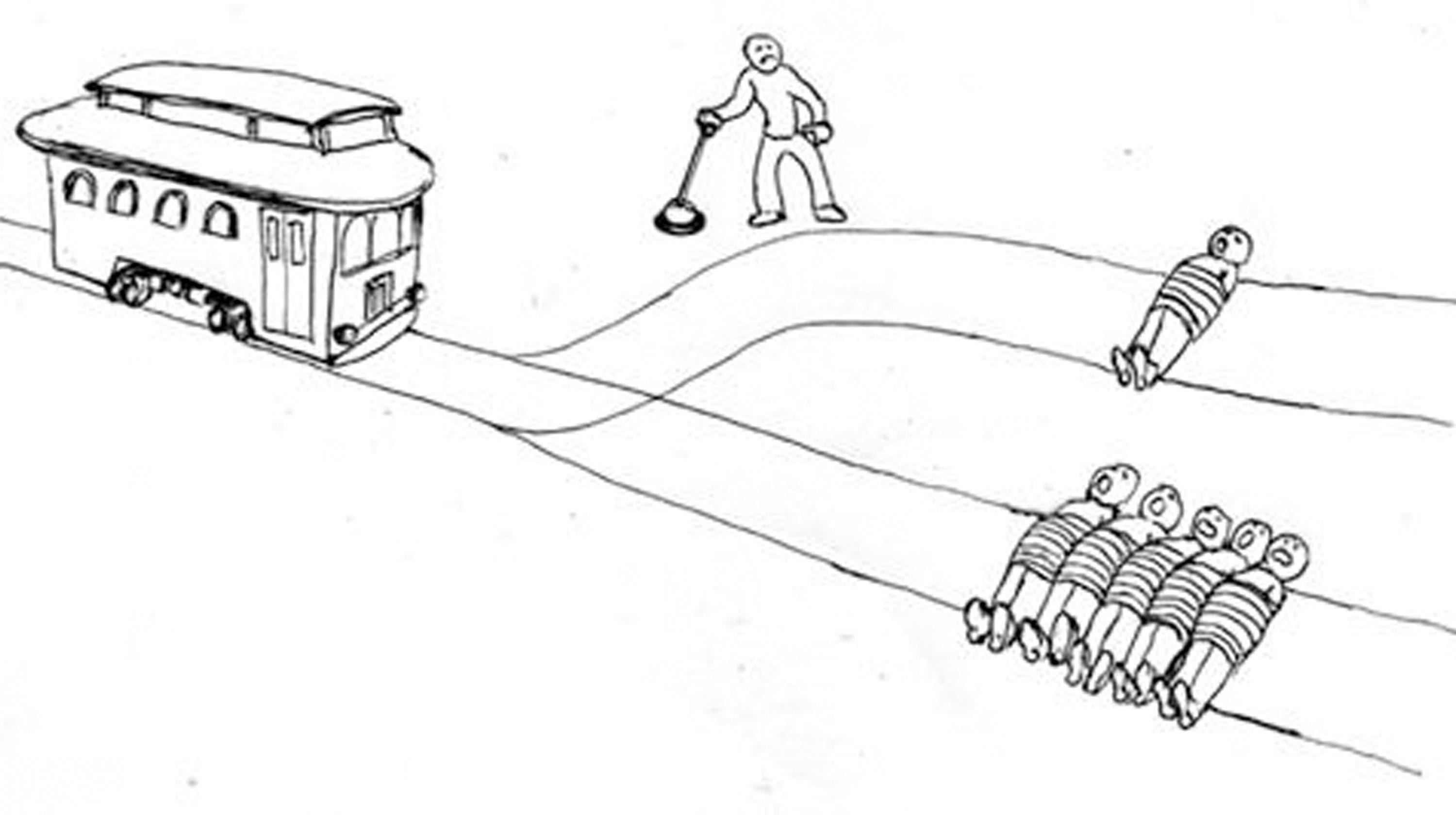
For the non-athlete student, there is less incentive to learn when survival and a better future are at stake. For instance, a traditional students faces a similar problem. Do you outsource your learning to AI so you can pick up one more shift, and pay for an extra class? Or do you drop that shift, and pay for your class in debt? There’s no great answer.
One notable outcome of this dynamic is that students cannot face a question in the moment. They do not know how to respond to a challenge, a query, or even a basic opinion question such as, “what do you think about X?” AI proves to be a bane to critical thinking and higher education. For me, I first allowed the technology in a limited capacity. Then I decided to prohibit it in an online class. My reasoning was straightforward. I wanted to help students improve their writing and critical thinking skills. I would not necessarily grade them on grammar or structure, but on thought and improvement. It is hard work, but necessary work. That is not how it ended up and the prohibition backfired. I now am working hard to design courses differently in the future. I hope everyone involved in education, from students to athletic directors, think on how to adjust their approach, too.
Hey reader! It’s me, Dr. Russo, the Professor. Writing all of this is wonderful and I could not do it without you. If you’d like to help maintain the quality and rigor, or just like what you read, a dollar, euro, or buck an article goes a long way. Subscribe with a special offer of just a buck, a euro, a dollar per month for your first year.